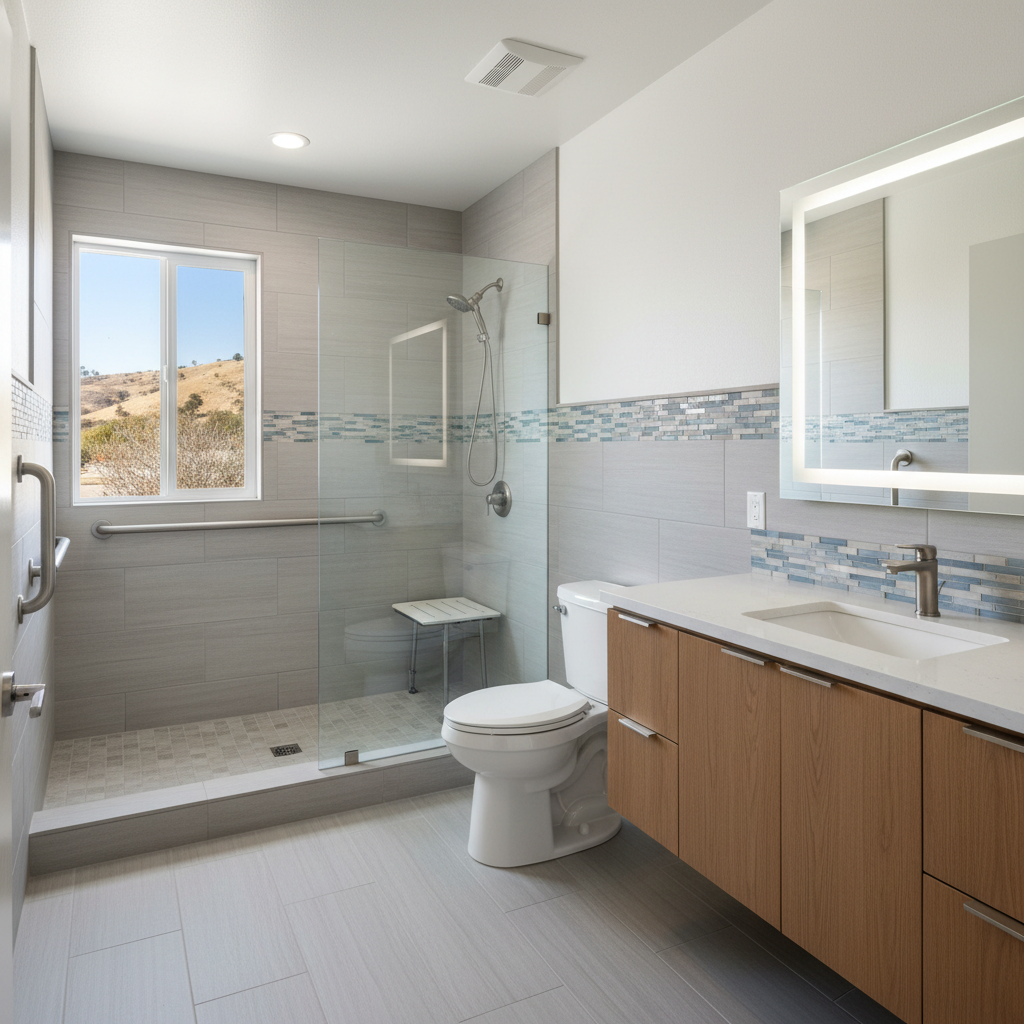
You put time and money into making your bathroom accessible, whether it was a full remodel or just some key upgrades. That's a big step towards independence and comfort. Now, how do you make sure that investment lasts? It's not just about fixing things when they break; it's about smart maintenance that extends the life of your accessible features.
Extending the Life of Your Accessible Bathroom
When we build an accessible bathroom at Camarillo Bathroom Solutions, we use materials and techniques designed for durability. But even the best work needs a little care. Think about your grab bars. They're not just there for looks; they're structural. Make sure they're not used as towel racks or for hanging heavy items. That constant, unintended stress can loosen the anchors over time, even if they're properly installed into studs or blocking. Same goes for shower seats. They're built to support body weight, but if someone's standing on them to change a lightbulb, you're asking for trouble.
Another big one, especially here in Camarillo with our hard water, is keeping things clean. Mineral deposits can build up on faucet aerators, showerheads, and even in the mechanisms of accessible toilets. This isn't just unsightly; it can impact performance. A quick wipe-down with a mild cleaner after each use goes a long way. For shower doors, especially those wider, accessible models, use a squeegee to prevent water spots and mildew. That Ventura County humidity, even if it's not as bad as other places, can still encourage mold if you're not on top of it.
What Regular Maintenance Looks Like
Okay, so what should you actually be doing? It's not rocket science, but it does require a little routine. Here's my checklist:
- Weekly Wipe-Down: Surfaces, fixtures, grab bars, and accessible toilet seats. Use non-abrasive cleaners.
- Monthly Check-Up: Test all grab bars by applying gentle pressure. Do they feel solid? Wiggle them a bit. Check the caulking around the tub, shower, and sink. Look for cracks or signs of separation. This is crucial for preventing water damage, which can be a real headache.
- Quarterly Deep Clean: Descale showerheads and faucet aerators. You can usually unscrew them and soak them in a vinegar solution. Clean out drain stoppers – hair and soap scum are the enemy of good drainage. Check the seals on your accessible toilet for any leaks around the base.
- Annually: Inspect the flooring. Are there any loose tiles, especially around the shower or toilet? Are the grout lines intact? For roll-in showers, pay extra attention to the threshold and any transition strips.
Don't forget about your exhaust fan. It's your best friend against moisture and mold. Clean the grille regularly, and make sure it's running effectively during and after showers. If it sounds like a dying squirrel or isn't moving much air, it's not doing its job.
Warning Signs of Problems
You don't need to be a contractor to spot trouble. Trust your gut. Here are some red flags:
- Loose Grab Bars: Even a slight wobble is a big deal. Don't ignore it.
- Cracked or Peeling Caulk/Grout: This is an open invitation for water to get where it shouldn't, leading to rot and mold behind your walls or under your floor. We see this a lot in older homes in the Las Posas Estates, where original construction wasn't always up to modern waterproofing standards.
- Slow Drains: A little slow is okay, but if water is pooling, you've got a clog forming.
- Persistent Musty Smell: Even with good cleaning, a constant damp or musty odor usually means hidden moisture or mold.
- Water Stains: On ceilings below the bathroom, on walls, or around the base of the toilet or shower. These are clear signs of a leak.
- Difficulty Operating Fixtures: If a lever handle on a faucet is stiff, or an accessible toilet flush mechanism feels off, address it before it fails completely.
When to Call a Professional
Look, I'm all for homeowners tackling what they can, but some things are best left to the pros. You should definitely call us or another qualified contractor if:
- You find a loose grab bar. Re-anchoring it correctly requires specific tools and knowledge to ensure it's secure for safety.
- You see significant water damage. This often means opening up walls or floors, which is beyond a DIY fix.
- You have persistent leaks you can't trace. Water finds the path of least resistance, and sometimes the source isn't obvious.
- Your accessible toilet isn't flushing right, or you suspect a deeper plumbing issue. Modern accessible toilets can have specific mechanisms that are tricky to repair without expertise.
- You're dealing with mold that's more than just surface mildew. Large patches of mold, especially if they keep coming back, indicate a bigger moisture problem.
- Any accessible feature isn't working as intended and you can't easily fix it. Your accessible bathroom is about safety and independence. Don't compromise that.
Don't wait until a small issue becomes a major, expensive repair. A little proactive care and knowing when to call in the cavalry will keep your accessible bathroom functioning safely and comfortably for many years to come. That's what we aim for at Camarillo Bathroom Solutions.